How to recognise the realities of abuse, understand why leaving is so difficult, protect your loved one, and become a source of strength throughout their journey towards freedom and recovery.

When Someone You Love Is Slowly Losing Themselves
There are few experiences more emotionally exhausting, frightening and heartbreaking than watching someone you love suffer in a toxic or abusive relationship. You see the changes taking place. You notice the anxiety, the withdrawal, the constant self-doubt, the loss of confidence and the gradual disappearance of the person you once knew. You hear the excuses, witness the repeated disappointments and perhaps even watch them defend the very person who is hurting them.
You may see manipulation where they see love, recognise coercive control where they see an argument, and identify emotional abuse where they believe they are simply being unreasonable, difficult or inadequate. You may watch them apologise for things they have not done, accept responsibility for things that are not theirs to carry, and continually adjust their behaviour in an attempt to prevent the next argument, accusation, punishment or emotional withdrawal. Perhaps the most painful part is that they don’t see it, or at least cannot yet fully acknowledge what is happening.
You want to shake them into reality. You want to explain, demonstrate, expose and prove what you can see so clearly. You want to tell them to leave, stand up for themselves and reclaim their lives. You may become frustrated when they return to the relationship after promising they wouldn’t, and perhaps even feel betrayed when they defend their abuser, withdraw from you, conceal information or appear to believe the very accusations that are destroying them.
You may also find yourself questioning your own role in the situation. Am I doing enough? Am I enabling this? Should I intervene? Should I confront the other person? How much longer can I watch this happen? These questions can create enormous emotional pressure, particularly when you feel that someone you love is in danger but seems unable or unwilling to recognise it.
If this sounds familiar, I want you to understand that you are also going through something really difficult. Supporting someone you love through abuse can place an enormous emotional and psychological burden on you. Your fear, anger, frustration, helplessness and exhaustion deserve recognition too. However, understanding what is happening to your loved one, and why some well-intentioned reactions can unintentionally make their circumstances more difficult or dangerous, is essential.
This article is intended to help you become a more informed, effective and emotionally grounded supporter. It is not about rescuing someone or taking control of their decisions. It is about understanding the complexity of abuse, recognising the risks, protecting the relationship between you and your loved one, and helping create the conditions in which they can eventually reclaim their autonomy, safety and sense of self.
Sometimes, the most powerful thing you can do is remain a safe person in a world that has become increasingly unsafe for them.
Read 25 Signs of Emotional Abuse
PART 1: UNDERSTANDING WHAT YOUR LOVED ONE IS EXPERIENCING
1. Abuse is not always visible
One of the biggest misconceptions about abusive relationships is that abuse must involve physical violence. It doesn’t. Some of the most devastating forms of abuse are psychological, emotional, verbal, financial, sexual, social and behavioural. They may be subtle, calculated and progressive, taking place over years without a single physical assault.
Coercive control, in particular, is not simply a collection of unpleasant arguments or isolated incidents. It is a pattern of behaviour designed to establish and maintain power over another person. It can involve isolating someone from family and friends, monitoring their communications and movements, controlling access to money or employment, humiliating and degrading them, manipulating their perception of reality, making threats, using intimidation and exploiting their vulnerabilities.
Other examples include excessive jealousy, possessiveness, deliberate provocation, blame-shifting, manipulation involving children and family members, and attempts to undermine the victim’s reputation, credibility and relationships. In some circumstances, legal processes, complaints, allegations and repeated litigation may also be used to intimidate, exhaust or financially destabilise someone.
Abuse can continue long after a relationship ends. Post-separation abuse may involve stalking, harassment, threats, financial control, manipulation through children, repeated litigation or the use of formal processes to maintain contact and control. Not every difficult legal dispute is abusive, and allegations must always be assessed on their evidence. However, repeated legal action, vexatious proceedings or knowingly false allegations can form part of a wider pattern of intimidation and coercive control.
In South Africa, the Domestic Violence Amendment Act 14 of 2021, which came into operation in April 2023, expressly expanded the statutory definition of domestic violence to include coercive behaviour, controlling behaviour, economic abuse and other forms of abuse. This is important because abuse should never be measured solely by visible injuries.
2. The victim may not recognise the abuse
One of the most difficult realities for supporters to accept is that someone can be experiencing serious abuse without recognising it as abuse. This is not necessarily because they lack intelligence, insight or common sense. Many victims are highly intelligent, capable, accomplished and otherwise very perceptive people. The problem is that prolonged exposure to manipulation and psychological abuse can fundamentally affect how a person interprets their own experiences.
Imagine being repeatedly told that you are too sensitive, that you are imagining things, that you are the problem, that nobody else would tolerate you, that you are mentally unstable or that everything that goes wrong is your fault. Now imagine hearing variations of these messages for months or years, sometimes alongside affection, apologies, promises and periods of apparent normality. Eventually, a person may begin questioning their own judgement.
They may no longer trust their memories, perceptions, emotions or decisions. Instead, they spend enormous amounts of energy trying to understand what they did wrong, how to prevent another incident and how to restore the relationship. The very person causing their distress may also be the person they are desperately trying to please in the hope of making that distress stop.
This is one reason why simply presenting someone with a list of abusive behaviours may not immediately change their understanding. Recognising abuse is often a gradual process involving fear, shame, confusion, emotional attachment and deeply ingrained survival responses. Do not confuse their inability to see the situation clearly with an unwillingness to help themselves.
Read The Dangers of Make Up Sex
3. Why leaving can feel almost impossible
From the outside, leaving may seem like the obvious solution. From the victim’s perspective, however, it may feel like stepping into an entirely unknown and potentially more dangerous situation. There are often several overlapping reasons why someone remains in an abusive relationship.
They may genuinely love the person, remember the good times and continue hoping that the relationship will return to what it once was. Periods of cruelty may alternate with affection, apologies, promises and apparent change. This unpredictable pattern, sometimes described as intermittent reinforcement, can strengthen attachment and make it difficult to disengage.
Fear is another significant factor. They may be frightened of physical violence, retaliation, stalking, threats, financial consequences, losing their children or being publicly humiliated. Financial dependence may leave them with limited access to money, employment, transport or accommodation. Family responsibilities can make the decision even more complicated, particularly when children are involved and the victim fears disrupting their lives or losing contact with them.
There may also be considerable psychological conditioning. Years of criticism, intimidation and manipulation can convince someone that they cannot cope independently. Shame and embarrassment may prevent them from seeking help, particularly if family and friends have repeatedly warned them. Social isolation can make matters worse, especially if they have gradually lost relationships and support systems and their abusive partner has become their primary source of companionship.
Legal intimidation can introduce another layer of difficulty. Threats of litigation, false or disputed allegations, protection orders, custody disputes and financial claims may make leaving feel like the beginning of an endless battle. And then there is hope: the belief that if they explain themselves properly, change their behaviour or demonstrate enough love, the other person will finally understand and change.
These are not trivial obstacles. They are real psychological, practical and sometimes life-threatening considerations. A victim may also have learnt to manage the abusive person’s behaviour as a survival strategy. They carefully monitor moods, anticipate triggers, avoid disagreement and make constant concessions because these behaviours may have helped reduce immediate danger in the past. What looks like passivity or compliance to an outsider may actually be an adaptive response to an unsafe environment.
4. Understanding survival responses and trauma bonds
When someone is repeatedly exposed to threats, unpredictability, intimidation or emotional distress, their nervous system may remain in a prolonged state of alert. They may develop hypervigilance, anxiety, difficulty concentrating, sleep disturbances, emotional numbing, irritability, confusion or difficulty making decisions.
Some people respond by fighting back, while others flee, freeze or appease. The appeasing response, often described as the fawn response, can involve excessive people-pleasing, compliance, apologising and prioritising the other person’s emotional state to reduce perceived danger. These responses are possible adaptations to perceived threat, not flaws in someone’s character.
The term trauma bond is also commonly used to describe a powerful attachment that can develop in relationships characterised by abuse, fear, intermittent kindness and unequal power. It is useful as a descriptive concept, although it is not a formal clinical diagnosis and should not be used to explain every victim’s experience.
The important thing to understand is that emotional attachment and recognition of abuse do not necessarily develop at the same pace. Someone can know that a relationship is hurting them and still feel deeply attached to the person. They can leave physically but remain emotionally entangled for a considerable period, or return more than once before achieving a lasting separation. None of this automatically means they are choosing the abuse.
Read When Love Hurts
5. The impact on identity and self-worth
Prolonged psychological abuse can gradually erode a person’s sense of identity. They may stop expressing opinions, pursuing interests, maintaining friendships or making independent decisions. They may become excessively apologetic, indecisive, defensive or emotionally reactive, and eventually no longer recognise themselves.
Some victims begin believing that they are fundamentally flawed, unlovable, incompetent or responsible for everything that goes wrong. Others become so preoccupied with surviving the relationship that they lose sight of their own needs entirely.
This is why telling someone to simply stand up for themselves can be so unhelpful. They may not currently possess the internal resources, confidence or sense of safety needed to do so. Rebuilding self-worth is not a switch that someone can turn on because a friend tells them they deserve better. It is a process of gradually recovering their ability to trust themselves, recognise their needs, establish boundaries and make decisions without constant fear.
6. The role of unresolved childhood trauma
An important consideration in the healing process is whether earlier experiences have contributed to behavioural patterns that the person carries into adult relationships. Someone who grew up in an environment characterised by emotional neglect, unpredictability, abandonment, criticism, conflict or conditional affection may have developed ways of relating that helped them survive childhood.
These might include believing that love must be earned, feeling responsible for other people’s emotions, avoiding conflict at almost any cost, struggling to establish boundaries, becoming excessively accommodating, seeking approval and validation, confusing intensity with intimacy or feeling uncomfortable with healthy disagreement. Some people may also find themselves remaining in familiar but unhealthy relational dynamics.
These patterns can influence adult relationships, but they do not cause another person to become abusive, nor do they make the victim responsible for the abuse. Not everyone who experiences abuse has unresolved childhood trauma. Healthy childhoods do not guarantee protection from abusive relationships, and childhood adversity does not predetermine someone’s future.
The purpose of exploring earlier experiences is not to find fault with the victim. It is to understand their personal history and identify patterns that may need attention during recovery. Healing should help someone develop healthier ways of relating to themselves and others, rather than simply teach them how to avoid one particular abusive person.
PART 2: WHAT SUPPORTERS NEED TO UNDERSTAND
Before deciding what to do, there are several essential principles every supporter should understand.
1. You cannot make someone see what they are not ready to see. You can share information, express concern and gently identify patterns, but you cannot force insight. Repeatedly trying to convince someone that they are being abused may overwhelm them, trigger defensiveness or make them withdraw. Allow them to process information at their own pace.
2. Their attachment to the abuser may be genuine. Do not assume they are pretending to love the person, being foolish or deliberately choosing suffering. Emotional attachment can coexist with fear, anger, disappointment and recognition that something is wrong.
3. Their behaviour may change considerably. They may cancel plans, withdraw, become defensive, contradict previous statements, return to the relationship or suddenly distance themselves from you. Try not to interpret every change as rejection or dishonesty. They may be managing competing emotional pressures and trying to stay safe.
4. They may be protecting the abuser. This can be particularly difficult for family and friends. Victims may minimise incidents, defend their partner, conceal information or even repeat the abuser’s accusations against themselves. This can reflect attachment, fear, shame, psychological conditioning or an attempt to preserve a relationship they still hope can be repaired.
5. Leaving is not necessarily the safest immediate option. Separation can be a particularly dangerous period in abusive relationships. The abusive person may experience the loss of control as a threat and escalate intimidation, stalking, threats or physical violence. A carefully planned exit, supported by appropriately qualified domestic violence professionals, is preferable to an impulsive confrontation or unplanned departure where there is a risk of violence.
6. The abuse may continue after separation. Do not assume that moving out or ending the relationship automatically ends the abuse. Post-separation harassment, financial manipulation, litigation, threats, stalking and manipulation through children can continue. The recovery process may therefore be considerably longer and more complicated than expected.
7. You may not know the entire story. Victims often disclose information gradually because they may be frightened, ashamed or uncertain about how much they can safely reveal. Do not interrogate them, demand proof or insist that they disclose everything. At the same time, remain objective and distinguish what you have personally witnessed, what the person has reported and what remains unverified.
8. They need autonomy, not another person controlling their decisions. The abusive relationship may already have deprived them of choice. Do not recreate that dynamic by taking over their decisions, dictating what they must do or making support conditional upon compliance. The objective is to help them recover their independence.
9. Recovery is not linear. There may be progress, setbacks, periods of clarity and periods of confusion. Leaving, returning, reconsidering and leaving again can form part of some people’s journeys. Progress should not be measured solely by whether they have physically left.
10. You are not responsible for rescuing them. You can provide support, information, practical assistance and a safe connection, but you cannot do their psychological work for them. You cannot control the abusive person’s behaviour, guarantee a safe outcome or determine when your loved one will be ready. Your role is important, but it has limits.
Read Silent Treatment is Emotional Abuse
PART 3: HOW TO SUPPORT YOUR LOVED ONE EFFECTIVELY
Understanding the circumstances is only the beginning. The next step is learning how to provide practical support without inadvertently increasing their vulnerability or compromising your own wellbeing.
What you should DO
1. Become a safe, consistent and non-judgemental person. Make it clear that they can speak to you without being criticised, shamed or told what to do. They need to know that you can tolerate hearing about their experiences without becoming so overwhelmed that they end up having to comfort you.
2. Listen more than you speak. Allow them to tell their story in their own words. You do not need to correct every contradiction, identify every manipulation tactic or explain every psychological concept. Sometimes being heard without judgement is an important first step towards recovering trust in their own perceptions.
3. Validate their experience without imposing your interpretation. You might say things such as, “That sounds incredibly difficult”, “You don’t deserve to be treated that way”, “I can understand why you’re feeling overwhelmed”, or “You are allowed to have your own opinions and feelings”. Let them know that they do not have to justify everything to you and that you are concerned about their safety. Where appropriate, gently identify specific behaviours rather than immediately labelling the entire person. For example, you could explain that repeatedly monitoring someone’s movements and preventing them from seeing family members are examples of controlling behaviour.
4. Help them reconnect with their identity. Talk about the things they used to enjoy, their interests, strengths, achievements and personal aspirations. Encourage activities that allow them to experience themselves as individuals again. Do not make every interaction about the abusive relationship. Sometimes the best support is an ordinary conversation, a shared meal, a walk, a laugh or an opportunity to enjoy something without having to explain themselves.
5. Offer practical assistance. Instead of simply saying, “Let me know if you need anything”, offer specific help. You could provide transport to appointments, assist with childcare, accompany them to seek professional assistance, help identify suitable accommodation or provide temporary storage for important documents. You might also help them explore employment or financial options, accompany them to legal consultations or help identify reputable domestic violence organisations. Small practical interventions can make an enormous difference.
6. Help them access appropriate professional support. Depending on their circumstances, this may include a domestic violence specialist, trauma-informed mental health professional, social worker, medical practitioner, family lawyer or financial adviser. Where there is a risk of violence, encourage specialist safety planning before taking action.
7. Encourage independence in manageable steps. Help them identify small areas in which they can regain choice and control. This might involve making an appointment themselves, reconnecting with a friend, managing a personal bank account safely or making an independent decision. Avoid turning recovery into another performance they must deliver to satisfy someone else.
8. Maintain contact without demanding constant engagement. If they withdraw, keep the door open. A simple message can communicate that you care without demanding an explanation or immediate response.
9. Respect confidentiality, with appropriate safety exceptions. Do not share their disclosures with mutual friends, family members or social media audiences without their consent. However, do not promise absolute secrecy where there is an immediate threat to life, serious risk to a child or another situation requiring urgent safeguarding.
10. Recognise and acknowledge progress. Celebrate the small victories. Recognising a pattern, establishing a boundary, asking for professional help or making an independent decision may represent significant progress. Do not wait until they have left before acknowledging their courage.
What you should NOT do
1. Do not repeatedly tell them to leave. They probably know that you want them to leave. Repeating it may increase shame, guilt and isolation without increasing their ability to act. Instead, ask what would help them feel safer right now.
2. Do not shame them for staying or returning. Never say things such as “I told you so”, “You brought this on yourself”, “How can you be so stupid?”, “You obviously don’t want help” or “You must enjoy the drama”. These statements reinforce the very feelings of inadequacy and helplessness that abuse may already have created.
3. Do not confront the abusive person. This is particularly important. Do not threaten, challenge, expose or attempt to intimidate the abuser, and do not announce that you know what is happening or reveal what your loved one has told you privately. Such actions may trigger retaliation against the victim, increase surveillance or compromise an eventual safety plan. Your anger may be entirely understandable, but an emotional confrontation is rarely a safe intervention.
4. Do not turn every conversation into an abuse investigation. Your loved one needs room to experience normal life. Constantly questioning them about what happened, what was said and whether they have finally recognised the abuse can become overwhelming.
5. Do not make their decisions for them. Avoid taking control of their finances, communications, legal decisions or living arrangements without their informed agreement. Support autonomy rather than replacing one controlling dynamic with another.
6. Do not make promises you cannot keep. Avoid promising that you will protect them from every consequence, finance an indefinite escape or resolve every legal problem. Offer what you can realistically sustain.
7. Do not criticise them for still loving the person. You may struggle to understand this attachment, but criticising it will not make it disappear. Their feelings may be complicated, and they need space to work through them.
8. Do not encourage reckless retaliation. Avoid revenge, public accusations, threatening messages, social media confrontations or attempts to provoke the abuser into revealing their behaviour. These actions may create further risks and legal complications.
9. Do not diagnose either person. Avoid casually assigning psychiatric diagnoses or personality disorders. Focus on observable behaviour, its impact and the safety implications.
10. Do not abandon your own boundaries. You can love someone deeply without being available around the clock, accepting abusive behaviour towards yourself or allowing their crisis to consume your entire life.
Read Domestic Violence
PART 4: SAFETY MUST COME BEFORE EVERYTHING ELSE
This section is particularly important. Although not every toxic relationship involves physical violence, coercive control and domestic abuse can escalate into serious injury or death. Supporters must never assume that because they have not witnessed physical violence, the victim is safe.
Recognising potential high-risk indicators
Certain circumstances warrant particular concern and professional risk assessment. These include threats to kill or seriously harm the victim, children, family members or pets; previous strangulation or attempted strangulation, even where there are no visible injuries; increasing frequency or severity of violence; stalking, surveillance or persistent unwanted contact; obsessive jealousy and possessiveness; access to firearms or other weapons; sexual violence; and threats of suicide or homicide.
Escalating intimidation following discussions about separation, previous breaches of protection orders or other safety restrictions, and threats involving children, finances, accommodation or reputation should also be taken seriously. The presence of one or more indicators does not predict with certainty what will happen, but these are recognised risk factors that should never be dismissed.
Non-fatal strangulation is especially serious. It can cause internal injury and carries important implications for future violence risk. Medical assessment is warranted even where there are no visible marks.
Why separation can be particularly dangerous
For someone who has maintained control through intimidation, manipulation or violence, the possibility of losing that control can provoke escalation. This is why an impulsive announcement that the victim is leaving, a sudden confrontation or a poorly planned escape may increase danger.
Do not pressure someone to announce their intentions, issue ultimatums or leave immediately without considering the risks. Where danger is suspected, contact a specialist domestic violence service to help assess the situation and develop a safety plan.
Practical safety planning
With the victim’s agreement and appropriate specialist guidance, there are several areas worth considering. Communication safety is particularly important. Establish whether their phone, email, social media or other devices may be monitored, and consider using a safer device to seek assistance if necessary. Shared accounts, location sharing, cloud access and password recovery arrangements should also be considered. Agreeing on a discreet code word or phrase that signals a need for help may be useful, but never send sensitive information to a device that may be monitored.
Emergency arrangements should include identifying a safe place they can go to, agreeing on how to contact emergency services and establishing who can assist with transport. Where children or pets are involved, their safety and practical arrangements need to be considered too.
Important identification, financial, medical and legal documents should be identified, with copies stored somewhere safe where appropriate. Consider access to independent funds and the practical necessities that may be required, including medication, keys, clothing and children’s essentials.
Where it is safe and lawful, relevant messages, emails, photographs, medical records and legal documents should be preserved. Maintaining factual records with dates, times and descriptions may also be helpful. Information should be stored securely, preferably somewhere the abusive person cannot access. Do not secretly access accounts, install tracking software, interfere with devices or make recordings without understanding the legal and safety implications.
Professional assistance is essential where there are significant risks. Seek specialist domestic violence guidance, obtain independent legal advice where children, protection orders, finances or litigation are involved, arrange medical attention when necessary and review the safety plan whenever circumstances change.
Remember that a safety plan should be individualised. A checklist cannot replace a professional assessment of a particular person’s circumstances.
Read Violence is a Human Issue Not a Gendered One
Children need special consideration
Children exposed to domestic abuse can experience significant emotional and developmental consequences, even when they are not directly assaulted. They may become hypervigilant, anxious, withdrawn, aggressive or excessively responsible for managing adult emotions.
They should never be used as messengers, spies, witnesses or intermediaries between adults. Do not coach them, interrogate them or ask them to gather evidence. Where children are involved, safeguarding must be considered alongside the victim’s safety, and appropriate child-protection and domestic violence guidance should be sought.
PART 5: THE OFTEN-OVERLOOKED REALITY OF POST-SEPARATION ABUSE
One of the greatest mistakes supporters make is assuming that the worst is over once the victim has physically left. Unfortunately, this is not always the case. In some circumstances, separation marks the beginning of a different phase of abuse.
The person may experience persistent harassment and intimidation, stalking and unwanted surveillance, repeated unwanted communication, financial pressure and economic sabotage, threats involving children, manipulation of extended family and mutual friends, or attempts to damage their professional reputation. False or disputed allegations, repeated legal applications and litigation may also form part of the circumstances, particularly where formal processes are being used to maintain contact and exert control.
The victim may suddenly find themselves defending their parenting, reputation, finances, character and credibility. They may have to engage with lawyers, courts, social workers, employers, schools and other institutions while simultaneously trying to recover psychologically. This can be exhausting, and supporters sometimes become frustrated because the victim appears unable to move on even though the relationship has ended.
Please understand that the abuse may not have ended. The victim may still be living with the consequences of the previous relationship while navigating new forms of intimidation.
During this phase, you can help enormously by remaining calm and avoiding emotional reactions to every new allegation or development. Encourage independent legal advice from someone experienced in the relevant field, help organise documents and establish factual timelines, and preserve evidence without altering or embellishing it. Avoid making public statements about disputed matters and do not engage in arguments with the opposing party or their representatives. Continue encouraging appropriate professional and psychological support, and recognise that recovery may be interrupted by ongoing legal and practical demands.
Where litigation is being used as a means of intimidation, it is particularly important to distinguish the legal issues from the psychological impact. The victim needs support to address both.
PART 6: THE HEALING PROCESS – REBUILDING A LIFE, NOT JUST LEAVING A RELATIONSHIP
Leaving an abusive relationship is not the same as recovering from it. Physical separation may remove someone from the immediate environment in which the abuse occurred, but it does not automatically undo the psychological effects. For some people, the realisation of what they have endured only begins to emerge once they are no longer spending every day trying to survive.
They may experience grief, anger, shame, confusion, anxiety, loneliness and even longing for the person they left. They may question their decisions, revisit memories and struggle to understand how things became so destructive. They may also feel overwhelmed by the practical consequences of starting again. This is why healing needs to be approached as a process, not an event.
1. Re-establishing safety and stability
The first priority is establishing physical and emotional safety. This includes secure accommodation, practical resources, appropriate professional support and a reduction in unnecessary exposure to the abusive person. A person cannot be expected to focus fully on personal development while still living under an immediate threat.
2. Rebuilding self-worth and self-esteem
Prolonged abuse can leave people believing that they are inadequate, incapable or undeserving of healthy relationships. Rebuilding self-worth involves gradually recognising personal strengths and abilities, learning to trust their perceptions, expressing opinions without excessive fear and making decisions independently. It also means establishing and maintaining boundaries, recognising personal needs and preferences, accepting that disagreement does not automatically mean rejection and understanding that love does not require enduring mistreatment.
This process takes time. Supporters can help by recognising the person’s abilities without making them feel that they must prove their worth.
3. Rebuilding self-trust
One of the most damaging consequences of gaslighting and prolonged manipulation is the erosion of confidence in one’s own judgement. The person may repeatedly seek reassurance, doubt decisions and fear making mistakes. Recovery involves learning to recognise what they think, feel and experience without automatically assuming that their perceptions are wrong. This is not about becoming infallible; it is about recovering the freedom to think independently.
4. Addressing unresolved trauma and survival patterns
Where appropriate, trauma-informed therapeutic work can help the person explore earlier experiences and behavioural adaptations that may influence their relationships. This may involve understanding attachment patterns, childhood experiences, emotional neglect, boundary difficulties, people-pleasing, fear of abandonment and other relevant themes.
The purpose is to identify what needs healing and what new skills need developing. It is important not to turn this into another exercise in blaming the victim. The fact that someone has vulnerabilities does not give another person permission to exploit them.
5. Learning healthy relational boundaries
People who have experienced coercive control may need to relearn what healthy relationships look and feel like. They may need to practise saying no, expressing disagreement, recognising manipulation, tolerating another person’s disappointment and distinguishing healthy compromise from self-abandonment. They also need to understand that boundaries are not punishments or attempts to control others. They are expressions of what they will and will not accept.
6. Processing grief and loss
Even when a relationship has been abusive, its ending can involve profound grief. The person may be grieving the relationship they hoped they would have, the person they believed their partner to be, the family structure they wanted to preserve, the years they feel they have lost, the opportunities they sacrificed, the future they imagined and their previous sense of identity.
Do not tell them they should be happy simply because they are now free. Freedom and grief can coexist.
7. Reconnecting with life and personal purpose
As stability returns, encourage them to rediscover their interests, friendships, aspirations and sense of possibility. The objective is not merely to avoid another abusive relationship. It is to build a life in which they feel safe, capable, connected and able to make meaningful choices.
8. Exploring post-traumatic growth
Post-traumatic growth does not mean that trauma was necessary, beneficial or justified, nor does it mean that everyone must turn their suffering into something positive. It describes the possibility of positive psychological change that some people experience through working through adversity.
This may include a greater appreciation for life, stronger personal relationships, increased awareness of personal strength, a clearer understanding of values and priorities, new possibilities and directions, or deeper personal and spiritual development.
Growth should never be demanded of a survivor. It emerges, if it does, through their own process and at their own pace. The objective is not to create a better version of someone who was abused. It is to help them recover their freedom to become who they choose to be.
PART 7: LOOKING AFTER YOURSELF AS A SUPPORTER
I want to return to you for a moment. You may have spent months or years worrying, researching, listening, intervening and trying to understand what is happening. You may feel that you are constantly waiting for the next crisis, angry with the abuser, frustrated with the victim and exhausted by the situation. You may even feel guilty when you want to step away for a while.
Please understand that you are allowed to have limits. Supporting someone through abuse can create secondary traumatic stress, emotional exhaustion and compassion fatigue. You may experience persistent worry and hypervigilance, anger and helplessness, sleep disturbances, difficulty concentrating, resentment, emotional exhaustion or feelings of responsibility for the victim’s safety. These reactions deserve attention too.
There are practical ways to protect your own wellbeing. Establish realistic boundaries around your time and availability, seek your own emotional support or professional guidance, and avoid taking responsibility for decisions that belong to the victim. Try not to become consumed by researching, monitoring or fighting the abuser. Maintain your own relationships, interests and routines, and do not expose yourself to unnecessary danger. Recognise when you need a break and remember that taking care of yourself is not abandoning someone else.
You can be a committed supporter without becoming the victim’s only support system. In fact, a network of reliable, appropriately informed supporters is often far more sustainable than one exhausted person trying to carry everything.
PART 8: WHAT TO SAY – AND WHAT TO AVOID
Sometimes supporters know exactly what they want to communicate but struggle to find the right words. The intention may be to encourage, protect or motivate, yet the way something is expressed can unintentionally increase shame, defensiveness or isolation. The following examples illustrate how a small change in wording can make a meaningful difference.
| What not to say | What to say instead |
| “Why don’t you just leave?” | “What would help you feel safer and more supported right now?” |
| “I told you this would happen.” | “I’m sorry you’re going through this. I’m here.” |
| “How can you still love this person?” | “I understand that your feelings are complicated.” |
| “You need to stand up for yourself.” | “You deserve to have choices and to feel safe.” |
| “You’re letting them get away with it.” | “You don’t have to resolve everything today.” |
| “You’re never going to change.” | “I believe you can rebuild your confidence, one step at a time.” |
| “I can’t believe you’re going back.” | “I’m concerned about your safety, and I want you to know you can still come to me.” |
| “You need to get over this.” | “Healing takes time. You don’t have to rush it.” |
One of the most valuable things you can communicate is that you will not judge them, pressure them or make their decisions for them. Let them know that you care, that you are concerned about their safety and that you are willing to support them in finding a way forward.
PART 9: WHEN TO SEEK URGENT HELP
If you believe someone is in immediate danger, do not attempt to manage the situation through ordinary family support. Contact emergency services. In South Africa, the following services may be useful:
- 112 – Emergency number from a cellphone.
- 10111 – South African Police Service.
- 0800 428 428 – Gender-Based Violence Command Centre, available 24 hours a day.
- *120*7867# – GBV Command Centre’s free USSD facility.
- 0800 001 005 – National Shelter Movement of South Africa.
- 021 480 7700 – City of Cape Town Public Emergency Communications Centre.
The GBV Command Centre can provide support and referrals, including assistance accessing social workers and shelters. For situations involving serious threats, strangulation, weapons, stalking or escalating violence, seek specialist risk assessment urgently. Do not wait for physical injury before taking credible threats seriously.
CONCLUSION: BE THE SAFE PLACE THEY CAN RETURN TO
If there is one thing I would like every supporter to take away from this article, it is that you do not have to rescue someone to make a profound difference in their life. You do not have to convince them of everything you know, solve every problem, confront every injustice or make every decision on their behalf. What you can do is understand what they are experiencing, recognise the risks, respond thoughtfully and help preserve the one thing abuse so often attempts to destroy: their ability to trust themselves and make their own choices.
There may be days when you feel that nothing is changing. There may be moments when they defend the person hurting them, return to the relationship or make decisions you find difficult to understand. There may also be times when you need to step back, breathe and remind yourself that this is their journey, not yours. Please do not mistake a difficult journey for a hopeless one.
The person you love may need time to recognise what is happening, time to feel safe enough to make decisions, time to rebuild their confidence and time to discover that they can live independently. They may need professional assistance, practical resources, legal protection, therapeutic support and a dependable network of people who will not disappear when progress becomes complicated. Above all, they need the opportunity to reclaim their autonomy.
When they eventually reach the point where they are ready to leave, they need to do so as safely as possible, with informed support rather than pressure and panic. Once they are out, the work does not end. That is when another important journey begins: rediscovering themselves, rebuilding their self-worth, addressing unresolved trauma, establishing healthy boundaries and learning that relationships can exist without fear, intimidation or control. This is where meaningful healing and the possibility of post-traumatic growth begin to emerge.
To those supporting someone through this experience, remember that patience does not mean ignoring danger, compassion does not mean abandoning your own boundaries, and support does not mean taking over another person’s life. Be honest, but do not impose your timetable. Be supportive, but do not take control. Above all, do not underestimate the power of consistently showing someone that they are worthy of respect, dignity, kindness and safety.
Sometimes, when someone has spent years being made to feel worthless, your consistent belief in their value becomes one of the first stepping stones towards believing in themselves again.
You may not be able to walk the journey for them but you can help ensure that they do not have to walk it alone. That can make all the difference.
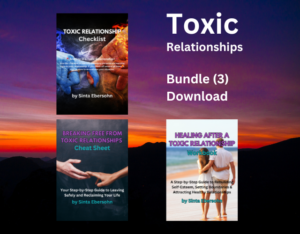
Instant PDF Downloads
Toxic Relationship Bundle:
Step by step checklists, practical guidelines and prompts to help victims and survivors gain clarity and start the healing process.
Toxic Relationship Checklist
Breaking Free from Toxic Relationships
Healing After a Toxic Relationship
Important note: This article is educational and does not replace individual domestic violence risk assessment, medical care, trauma-informed psychological treatment or independent legal advice. Where there is immediate danger, prioritise emergency assistance and specialist safety planning.